

vboy.over-blog.com/
15 Décembre 2020

Jul 16, 2020 Instead, software plugins (VST) do a great job of emulating the sound of the devices that have shaped music. Even the commercial music industry studios are more and more utilizing software plugins. The trend in 21st century music production is to capture the same 'character' and 'personality' that went into a vintage record, and apply. Recorder is a free utility audio VST plugin which allows you to record the output of the channel or bus into the stereo WAV file of specified bit depth. Routing to MME (multimedia extensions) soundcard is also supported. Virtual Studio Technology and its acronym VST refer to an interface standard for connecting audio synthesizer and effect plugins to audio editors and hard-disk recording systems. VST and similar technologies allow the replacement of traditional recording studio hardware with software counterparts. VST plug-ins are software modules that can take the form of real-time instruments or effects. Thousands of plugins exist, making VST the most widespread audio plugin architecture. If you have a budget to acquire plugins, here are some of the best VSTs for building up a software instrument library: Vienna Symphonic Library Spitfire Audio Albion One EastWest Composer Cloud (available as a monthly subscription).
Audio recording software is a necessary thing when it comes to audio recording and related tasks. Whether it is for the basic sound recording needs or professional audio production, these software tools will help you in the process. They will not only help you to record audio but will also let you create professional outputs by letting you edit them as per your needs. But as the audio recording is our primary intention, we are now concentrating on the 12 best audio recording software.

Most of the below-listed items are free recording software so that you don't have to worry about the money. However, it may include some paid applications as well because the quality of the service is also a factor that we considered during the sorting process. If you are not planning to buy a premium audio recording tool, you may skip the paid tools. Below is the best audio recording software.
Audacity is a free open source digital audio editor and recording software developed by The Audacity Team. The software was first introduced on May 28, 2000, which makes it 17 years old as of now. Audacity lets you record audio from multiple input devices such as an external microphone, a built-in microphone, or even the PC streaming. The high-quality sound clips will be added to the interface allowing you to edit them further. You can control many audio features such as amplification, noise reduction, silence removal, etc.
The software is available for Windows, OS X, Linux, and other operating systems and supports almost all popular audio formats including such as MP3, WAV, FLAC, and OGG. So, if you are searching for the best audio recorder, Audacity is the answer.
MixCraft is nothing less than a fast, reliable, and efficient audio recording tool. MixCraft is developed by the Acoustica team well known for its software contributions. Powered by a lightning-fast sound engine, it is a complete audio production suite. Unlike Audacity, you have to pay a few dollars to enjoy the complete benefit of the software. However, a free trial version is provided by the company. Mixcraft is available for all the Windows versions and supports almost all of the popular formats.
Presonus Studio One is a professional audio editing software which also allows recording it. Available for both Windows and Mac versions, this software is a dream of any DAW user. It contains a bunch of professional functions all are helpful for producing high-quality music content. If you are not satisfied with the free features of the Presonus Studio One, you could go for the premium version where tons of new features added.
Sonar provides the most advanced audio editing environment among the software on this list. It supports some extra audio formats such as WAV, ASF, WMA, and AIFF. It is available for all Windows versions including Windows 10, 8, 7, Vista, and XP. Sonar The software consists of numerous functions like mixers and MIDI keyboards which are all helpful to product stunning audio outputs. In addition, virtual machines like samplers, drum machines, and synthesizers are also there in the software.
Reaper is a lightweight audio editing application with a simple interface and comparatively professional functions. The clean interface is the most attractive feature of this sound tool. You could control the audio features like the stereo, surround sound, as well as the effects like pitch shift, cross-fade, and snap to grid. Reaper is available for both Mac and PC systems and supports audio formats including FLAC, MOV, W64, AIFF in addition to the usual formats.
Muse is an audio sequencer and recorder software dedicated to the Linux OS. If you are a Linux user, you should consider Muse above any of the above applications. You can record from the input sources in both stereo/mono modes. It also supports real-time audio recording. It is a free audio recorder and has no premium versions to upgrade. So, it is very likely for Linux users.
Ocenaudio is a good audio editing software with a good number of useful features. Being a fast audio editor, the software performs quite nicely in the recording part as well. The software offers numerous audio effects like 31 band equalizer, flanger, chorus, multiple filters, etc. It is one of the most popular audio editing tool for PC, Linux, Ubuntu, and Mac operating systems. Ocenaudio is completely free to use and supports the formats including MP3, WAV, and AIFF.
AudioDope is yet another tool that allows editing music files or other audio files. With minimal features, the software is still helpful for both basic audio editing needs and advanced needs. It contains a full audio waveform analysis to improve the quality of the recorder audio file. It features numerous audio filters and effects like high/low pass filters, normalization, pitch scale, chorus, and reverb. Image smith v1 2 7. AudioDope is currently available for PC and completely free to use. The software also supports extending the features using the VST plug-ins like compressors and phrases. It is a must-try.
Wavosaur is another free audio editor in this list for editing, processing, and recording sounds. The best thing that we attracted to this tool is its small file size. The software is only about 1.5MB in size and allows editing huge audio files. The lightweight interface is a sweetening factor of this tool that never failed to provide extreme performance on the editing and recording process. It has no price and is available for all Windows versions.
Ardour is an open-source DAW available for the Mac and Linux operating systems. It has the most useful multi-track recording feature alongside many other useful functionalities. Some cons of the software include the lack of built-in effects and filters and the unavailability of the Windows version. If you are ready to adjust to these issues, Ardour also is a good software to record audio.
NCH is a very old program that allows different operations related to recording music, mixing audio, editing music, etc. It is available for both Windows and Mac platforms with professional functions packed inside. If you are not a fan of any of the above-listed programs, the NCH music recorder is a good choice. A free trial version is available in case you want to give it a try before paying some of your hard-earned money on it. So, don't hesitate to try NCH.
Rosegarden is another music editor and recorder software which is specially developed for the Linux users. So if you are a proud Linux OS user, you should try this recording software for Linux. The powerful recording system on this tool is capable of capturing crystal clear sound. After finishing the recording, you will be able to edit the recordings as per your requirements. It is a must-try for the Linux users.
Which audio recorder software will you choose for your audio editing needs? Would you go for free software or a premium one? Let us know your thoughts. Also, don't forget to recommend any other tools which we missed to include in this top audio recording software list.
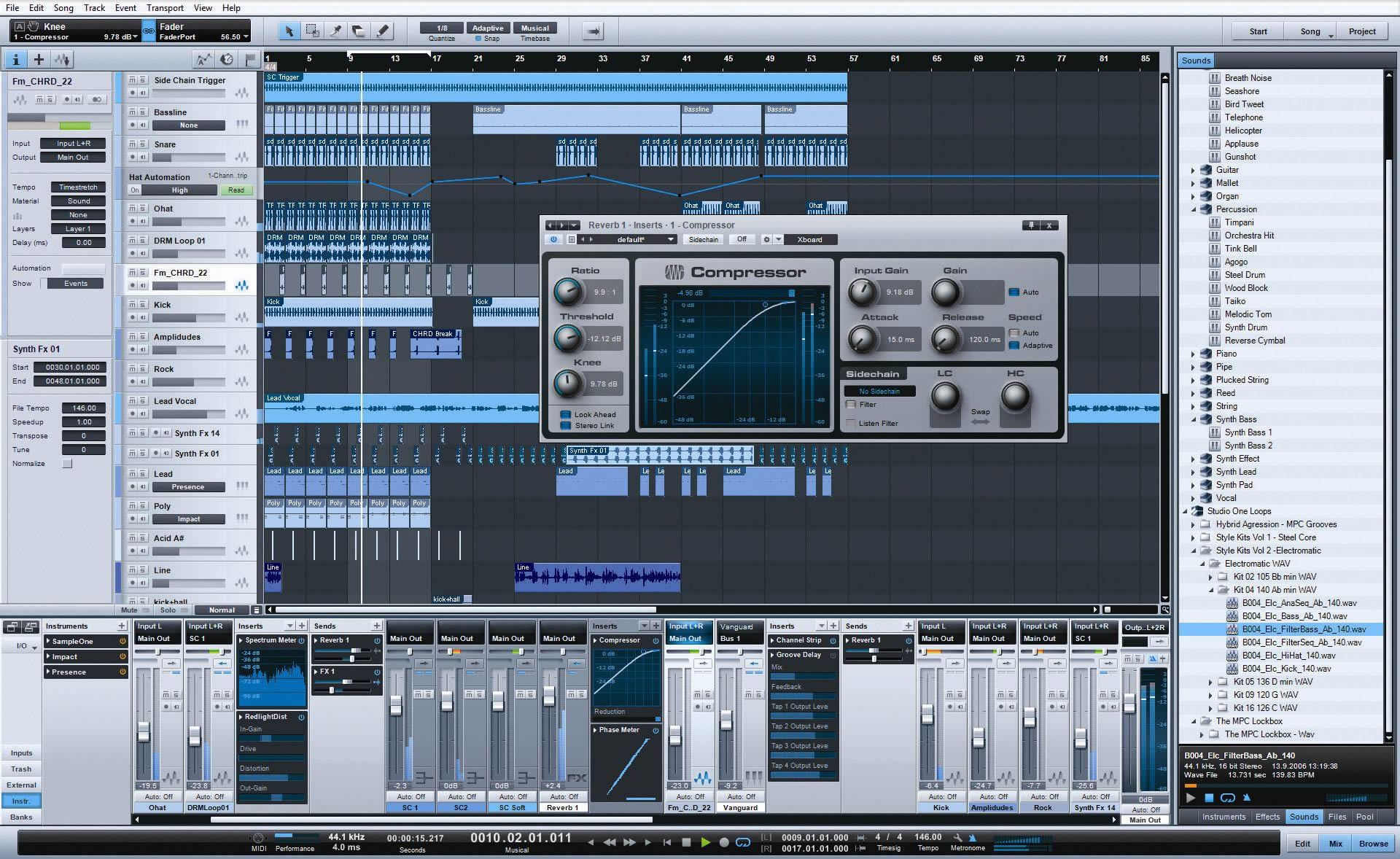
Virtual Studio Technology (VST) is an audio plug-in software interface that integrates software synthesizers and effects units into digital audio workstations. VST and similar technologies use digital signal processing to simulate traditional recording studio hardware in software. Thousands of plugins exist, both commercial and freeware, and many audio applications support VST under license from its creator, Steinberg.
VST plugins generally run within a digital audio workstation (DAW), to provide additional functionality, though a few standalone plugin hosts exist which support VST. Most VST plugins are either instruments (VSTi) or effects (VSTfx), although other categories exist—for example spectrum analyzers and various meters. VST plugins usually provide a custom graphical user interface that displays controls similar to physical switches and knobs on audio hardware. Some (often older) plugins rely on the host application for their user interface.
VST instruments include software simulation emulations of well-known hardware synthesizers and samplers. These typically emulate the look of the original equipment as well as its sonic characteristics. This lets musicians and recording engineers use virtual versions of devices that otherwise might be difficult and expensive to obtain.
VST instruments receive notes as digital information via MIDI, and output digital audio. Effect plugins receive digital audio and process it through to their outputs. (Some effect plugins also accept MIDI input—for example, MIDI sync to modulate the effect in sync with the tempo). MIDI messages can control both instrument and effect plugin parameters. Most host applications can route the audio output from one VST to the audio input of another VST (chaining). For example, the output of a VST synthesizer can be sent through a VST reverb effect.
Steinberg released the VST interface specification and SDK in 1996. They released it at the same time as Steinberg Cubase 3.02, which included the first VST format plugins: Espacial (a reverb), Choirus (a chorus effect), Stereo Echo, and Auto-Panner.[2]
Steinberg updated the VST interface specification to version 2.0 in 1999. One addition was the ability for plugins to receive MIDI data. This supported the introduction of Virtual Studio Technology Instrument (VSTi) format plugins. VST Instruments can act as standalone software synthesizers, samplers, or drum machines.[3]
Neon[4] was the first available VST Instrument (included with Cubase VST 3.7). It was a 16-voice, 2-oscillator virtual analog synthesizer.[3]
In 2006, the VST interface specification was updated to version 2.4. https://herehfile461.weebly.com/free-text-software-for-pc.html. Changes included the ability to process audio with 64-bit precision.[5] A free-software replacement was developed for LMMS that would be used later by other free-software projects.[6][7]
VST 3.0 came out in 2008. Changes included:[8]
VST 3.5 came out in February 2011. Wifi camera software. Changes included note expression, which provides extensive articulation information in individual note events in a polyphonic arrangement. Infographics lab 3 4 8 0. According to Steinberg, this supports performance flexibility and a more natural playing feel.[9]
In October 2011, Celemony Software and PreSonus released Audio Random Access (ARA), an extension for audio plug-in interfaces, such as VST, allowing greater integration between audio plug-ins and DAW software.[10]
In September, 2013, Steinberg discontinued maintenance of the VST 2 SDK. In December, Steinberg stopped distributing the SDK.[11] The higher versions are continued.
VST 3.6.7 came out in March, 2017. It includes a preview version of VST3 for Linux platform, the VST3 part of the SDK gets a dual license: 'Proprietary Steinberg VST3' or the 'Open-source GPLv3'.
As VSTi virtual instrument technology was under development at Steinberg, a platform for virtual instruments using DirectX engine technology was being developed by Cakewalk, famous for its Sonar DAW. However, the format did not gain much acceptance beyond instruments bundled with SONAR. Currently, almost all virtual instruments on the market use Steinberg's VSTi format.[citation needed]
There are three types of VST plugins:
A VST host is a software application or hardware device that VST plugins run under. The host application presents the plugin UIs and routes digital audio and MIDI to and from the plugins.
Many VST hosts are available. Not all of these support VST 3 plugins.
Stand-alone dedicated hosts provide a host environment for VST plugins rather than use the plugins to extend their own capabilities. These are usually optimized for live performance use, with features like fast song configuration switching.
VST plugins can be hosted in incompatible environments using a translation layer, or shim. For example, FL Studio only supports its own internal plugin architecture, but an available native 'wrapper' loads VST plugins, among others. FXpansion offers a VST-to-RTAS (Real Time AudioSuite) wrapper that lets VST plugins run in Pro Tools, and a VST-to-Audio Units wrapper lets VST plugins run in Logic Pro.
Hardware VST hosts can load special versions of VST plugins. These units are portable and usable without a computer, though some of them require a computer for editing. Other hardware options include PCI/PCIe cards designed for audio processing, which take over audio processing from the computer's CPU and free up RAM.
Some hardware hosts accept VSTs and VSTis, and either run Windows-compatible music applications like Cubase, Live, Pro Tools, Logic etc., or run their own DAW. Other are VST Hosts only and require a separate DAW application. Origin from Arturia is a hardware DSP system that houses several VST software synthesizers in one machine, like Jupiter 50/80 from Roland. Using appropriate software, audio data can also be sent over a network, so the main host runs on one computer, and VST plugins on peripheral machines.
The VST plugin standard is the audio plugin standard created by Steinberg to allow any third-party developers to create VST plugins for use within VST host applications. Android to apple data transfer app. VST requires separate installations for Windows, Mac OS X and Linux. The majority of VST plugins are available for Windows only due to Apple's competing proprietary Audio Unit technology being used on OS X (Audio Units is a core part of the OS X operating system). The short history of commercial environments for Linux means few developers have targeted this platform.
VST plugins often have many controls, and therefore need a method of managing presets (sets of control settings).
Steinberg Cubase VST introduced two file formats for storing presets: an FXP file stores a single preset, while an FXB file stores a whole bank of presets. These formats have since been adopted by many other VST hosts, although Cubase itself switched to a new system of preset management with Cubase 4.0.
Many VST plugins have their own method of loading and saving presets, which do not necessarily use the standard FXP/FXB formats.
Steinberg's VST SDK is a set of C++ classes based around an underlying C API. The SDK can be downloaded from their website.
There are several ports available, such as a Delphi version by Frederic Vanmol,[13] a Java version from the jVSTwRapper project at Sourceforge,[14] and two .NET versions – Noise[15] and VST.NET;[16] this open source project also includes a framework that makes creating VST plugins easier and result in more structured code. VST.NET also provides support for writing managed host applications with a managed class that allows loading an unmanaged Plugin. A notable language supporting VST is FAUST, considering that it is especially made for making signal processing plugins, often producing code faster than hand-written C++.
In addition, Steinberg has developed the VST GUI, which is another set of C++ classes, which can be used to build a graphical interface. There are classes for buttons, sliders and displays, etc. Note that these are low-level C++ classes and the look and feel still have to be created by the plugin manufacturer. VST GUI is part of the VST SDK and is also available as a SourceForge project.[17]
Many commercial and open-source VSTs are written using the Juce C++ framework instead of direct calls to the VST SDK because this allows multi-format (VST, Audio Units and Real Time AudioSuite) binaries to be built from a single codebase.


/image%2F6186767%2F20210124%2Fob_268701_how-to-turn-apple-mouse-on.png)
/image%2F6186767%2F20210118%2Fob_5d59ff_apple-i-messenger-for-mac.gif)
/image%2F6186767%2F20210118%2Fob_65cde0_shazam-for-macbook-air.jpeg)
/image%2F6186767%2F20210118%2Fob_ea20c1_video-sound-changer-software.jpeg)